I've been reading a lot about grains lately, motivated by a huge trend towards grain free diets. It all started with wheat (gluten) and has expanded to most grains and legumes. You may have heard of the all too popular Paleo diet or lifestyle. Advocates of this diet claim that grains are to blame for the multitude of auto immune diseases that have emerged in the last decade. To say that I've been intrigued by such radical rejection of a whole food group would be an understatement. You may have already guessed that I'm not an early adopter or pioneer. Im far from it actually. I tend to sit on the sidelines and watch, study, and only after ample time for deliverance, do I subscribe to an idea. In this case I'm actually refusing to subscribe. Allow me to elaborate.
For millennia humans have been cultivating and consuming grains. Many civilizations thrived on single crops as their main sustenance. But historically grains were revered and given the proper care and treatment before consumption. Something we have far deviated from. For starters, seeds were carefully hybridized and handled by seasoned farmers who knew, through years of experience, how to enhance the harvest based on the characteristics of the soil and the natural environment. Man made chemicals such as pesticides began to take off around the 1950s, so they really are a modern era phenomenon. Not surprisingly around the same time commercial agriculture began to replace small farming and the focus shifted from cultivating the best grains to getting the most output, at the expense of environmental and human health.
Is it really that bad? Well yes and no. Perhaps the consumption or over consumption of genetically modified or pesticide ridden grains has already put a toll on our guts. And since immunity begins in the gut, I'm not at all surprised to learn about the high correlation (not necessarily causation!) between grains and auto immune conditions. So, is it too late? I'd like to think not. Here are a few things we can do to avoid further exposure to toxics and harmful effects to our bodies. Read: you do not have to stop eating grains! Just because someone you know is gluten or grain intolerant doesn't mean you are. Get tested if you have any concerns but I can almost guarantee that if you take these precautions you will be able to digest grains without problem.
1) Buy organic whenever possible. But, make sure all the wheat, rice and corn you consume is organic. Rotate your grains! Do not consume too much of anything.
2) Soak your grains and legumes, overnight. Better yet, germinate or sprout them for 36 hours.
3) Cook your grains and legumes with a weed, like dandelion, and/or an acid component like tomatoes. Doing so will greatly reduce phytic acid, a substance present in grains and legumes that interferes with proper digestion and absorption of essential vitamins and minerals.
Epazote in your beans? That's right! Yogurt on your lentils? Surprised? Many baked goods call for buttermilk or apple cider vinegar. I guess someone has known about this process all along. In the last few years we are spending less and less time in the kitchen. Our busy lifestyles and the convenience of prepackaged goods have made it all too easy to omit essential steps in our cooking process. All to our detriment really.
Proper handling of grains and legumes is essential for proper digestion. Most commercial processed wheat products are not sprouted. Look for those that are or make your own. I'm still searching for a good breakfast bread for toast but what I really need to do is make my own bread. And don't forget your oats! Yes, oats are also a grain :)
Grains and legumes contain essential vitamins and nutrients. Eat them in moderation but treat them with proper care.
- Posted using BlogPress from my iPad
Sunday, August 25, 2013

Wednesday, August 14, 2013
Update on food budget
The end of our budget period nears and our pantry and refrigerator clearly reflect it. This week we've managed to use up stuff that had been neglected either at the back of our pantry shelves or in our freezer (remember i don't throw food away if i can help it). If it hadn't been for our weekly CSA we would have cracked down and shopped for some fresh items which would have put us over budget. All things considered we DID have a camping trip which required some "extras," so not all is bad.
Here is a picture that requires no caption. The big blue bowl contains a simple pesto pasta which will be dinner tomorrow. The pyrex holds a small serving of squash bake which will be my breakfast. I typically eat toast but we have been out of it all week. We have 6 eggs left in the carton from a dozen I picked up yesterday and my fermented vegetables. That's it!
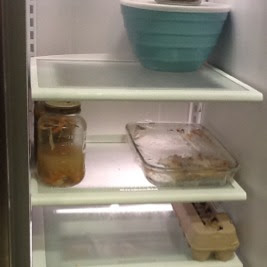
Tomorrow we start a new month. Our goal: $700 budget, less processed food, and hopefully a better looking refrigerator come September 15th :) I must confess that I've been much more appreciative of my food this week. A little self restraint doesn't hurt anyone.
- Posted using BlogPress from my iPad
Here is a picture that requires no caption. The big blue bowl contains a simple pesto pasta which will be dinner tomorrow. The pyrex holds a small serving of squash bake which will be my breakfast. I typically eat toast but we have been out of it all week. We have 6 eggs left in the carton from a dozen I picked up yesterday and my fermented vegetables. That's it!
Tomorrow we start a new month. Our goal: $700 budget, less processed food, and hopefully a better looking refrigerator come September 15th :) I must confess that I've been much more appreciative of my food this week. A little self restraint doesn't hurt anyone.
- Posted using BlogPress from my iPad
Monday, July 29, 2013
As a single income family living in a privileged neighborhood we are faced with the challenge of keeping a strict budget. I won't bore you with all the details of ours but I would like to offer what we do to stay within budget even while eating good quality food (ie, organic, Grassfed, pastured, etc).
Our food budget is $700 a month. Some families may consider this a large sum but if you figure that we eat almost every meal at home, this amount breaks down as follows: $700/30days = $23 a day so that's roughly $8 a meal, for 4 (yes, my kids eat like adults). But I'm still struggling to make it work. Here is how it breaks down:
On a typical month I do 3 large purchases:
1) 4lbs of 100% grass-fed beef from Realfoodbayarea.com. They average about $8lb since I get a mix of ground and premium cuts so that's roughly $32 a month
2) Costco for bulk items such as: quinoa, almond butter, tomatoes in a jar, kids snacks, coffee, frozen berries, etc. we typically spend about $200 a month on food exclusively from Costco.
3) Beans in bulk from whole foods or now, new leaf. I buy anywhere from 8 to 10lbs of different beans, peas, and lentils. I buy them here because they are organic. I typically spend about $40 on bulk items.
I was used to spending an average of $40/week at the farmers market although recently I have signed up to a CSA (community supported agriculture) so the cost has gone down to $20/week. I also started buying pastured eggs from the same farm at $7 a dozen and I get one every week.
We buy the bulk of our food from trader joes and we spend an average of $120/week
So we have $32 + $200 + $40 + $80 + $28 + $480 = $860!
So here are some things I plan to do to remain within budget:
1) purchase less convenience meals: frozen burritos, hummus, prepackaged snacks, etc
2) limit our weekly trader joes budget to $100. It's going to be tough but we can make it work.
If I'm able to cut our Costco bill to $130 and our TJ bill to $100/week we are still $10 over budget but very close to our target.
I'd love to her your ideas for keeping the cost of groceries down while maintaining quality.
- Posted using BlogPress from my iPad
Our food budget is $700 a month. Some families may consider this a large sum but if you figure that we eat almost every meal at home, this amount breaks down as follows: $700/30days = $23 a day so that's roughly $8 a meal, for 4 (yes, my kids eat like adults). But I'm still struggling to make it work. Here is how it breaks down:
On a typical month I do 3 large purchases:
1) 4lbs of 100% grass-fed beef from Realfoodbayarea.com. They average about $8lb since I get a mix of ground and premium cuts so that's roughly $32 a month
2) Costco for bulk items such as: quinoa, almond butter, tomatoes in a jar, kids snacks, coffee, frozen berries, etc. we typically spend about $200 a month on food exclusively from Costco.
3) Beans in bulk from whole foods or now, new leaf. I buy anywhere from 8 to 10lbs of different beans, peas, and lentils. I buy them here because they are organic. I typically spend about $40 on bulk items.
I was used to spending an average of $40/week at the farmers market although recently I have signed up to a CSA (community supported agriculture) so the cost has gone down to $20/week. I also started buying pastured eggs from the same farm at $7 a dozen and I get one every week.
We buy the bulk of our food from trader joes and we spend an average of $120/week
So we have $32 + $200 + $40 + $80 + $28 + $480 = $860!
So here are some things I plan to do to remain within budget:
1) purchase less convenience meals: frozen burritos, hummus, prepackaged snacks, etc
2) limit our weekly trader joes budget to $100. It's going to be tough but we can make it work.
If I'm able to cut our Costco bill to $130 and our TJ bill to $100/week we are still $10 over budget but very close to our target.
I'd love to her your ideas for keeping the cost of groceries down while maintaining quality.
- Posted using BlogPress from my iPad
Location:Our food budget
Rant
I spend an exorbitant amount of time doing dishes. It's the first thing I do in the morning (put them away) and the last thing I do before bed. Am I obsessed with my dishes? I don't think so, but I wonder what would happen if I let them pile for a day.
- Posted using BlogPress from my iPad
- Posted using BlogPress from my iPad
Saturday, June 22, 2013
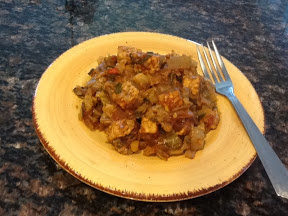
May recipe challenge: Tempeh Picadillo
I made this recipe back in May but I didn't photograph it so I couldn't post it then. Here it is, a month later. Story of my life.
There are a few things you should know about traditional picadillos. The term Picadillo comes from "Picar" which in Spanish means to chop. It is basically a chopped salad, only it's cooked. It is typically made with ground beef or pork and then you add any and all vegetables you have at hand, season it and serve it inside tacos, enchiladas or paired with beans and/or rice. It's a very simple and easy recipe and one that made an appearance on our table many times.
We are going out of town next week and I wanted to clean out my refrigerator, so I decided that a Picadillo was in order. I added things to it my mom would probably say I pushed the limits. But then I always do :) so here is my June version of last months challenge:
Tempeh Picadillo
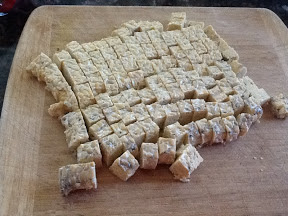
2 packages of organic tempeh, cut into 1/2 inch cubes
3 organic leeks, chopped (white and green parts only)
1 organic red bell pepper, seeded and chopped
1 organic yellow bell pepper, seeded and chopped
3 stalks of organic celery, chopped
1/2 cabbage, finely chopped (I used organic but conventional is ok--clean 15)
4 medium to large organic bok choy chopped finely.
1/2 cup chopped organic cilantro
4 cloves of garlic
2 cups organic chopped tomatoes
1/2 cup of beer
1 cup vegetable broth
2tb olive oil, divided
1tsp cumin
1tsp ground coriander
1tsp dry chipotle chili
Salt and pepper to taste
Directions
1. Heat 1tb olive oil in large sauté pan and brown tempeh on all sides. Add spices and cook until fragrant. Set aside.
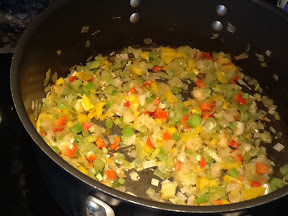
2. In the same pan heat 1tb of olive oil and sauté leeks, peppers, and celery until vegetables are soft.
3. Add garlic and cook for 1 minute. Add beer, tomatoes, broth, salt and pepper and bring to a slow simmer. Add tempeh back to pan, cover and let simmer for approximately 10 minutes.
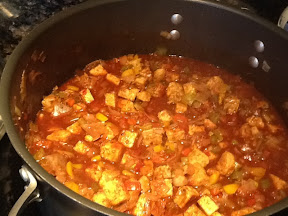
4. Add cabbage and bok choy. Taste for seasonings and adjust accordingly. Cover and let simmer until vegetables are cooked (~20 minutes). Add cilantro, turn off heat and let sit for a few minutes.
5. Serve with tortillas, beans, rice, or just by itself.
6. Enjoy!
- Posted using BlogPress from my iPad
There are a few things you should know about traditional picadillos. The term Picadillo comes from "Picar" which in Spanish means to chop. It is basically a chopped salad, only it's cooked. It is typically made with ground beef or pork and then you add any and all vegetables you have at hand, season it and serve it inside tacos, enchiladas or paired with beans and/or rice. It's a very simple and easy recipe and one that made an appearance on our table many times.
We are going out of town next week and I wanted to clean out my refrigerator, so I decided that a Picadillo was in order. I added things to it my mom would probably say I pushed the limits. But then I always do :) so here is my June version of last months challenge:
Tempeh Picadillo
2 packages of organic tempeh, cut into 1/2 inch cubes
3 organic leeks, chopped (white and green parts only)
1 organic red bell pepper, seeded and chopped
1 organic yellow bell pepper, seeded and chopped
3 stalks of organic celery, chopped
1/2 cabbage, finely chopped (I used organic but conventional is ok--clean 15)
4 medium to large organic bok choy chopped finely.
1/2 cup chopped organic cilantro
4 cloves of garlic
2 cups organic chopped tomatoes
1/2 cup of beer
1 cup vegetable broth
2tb olive oil, divided
1tsp cumin
1tsp ground coriander
1tsp dry chipotle chili
Salt and pepper to taste
Directions
1. Heat 1tb olive oil in large sauté pan and brown tempeh on all sides. Add spices and cook until fragrant. Set aside.
2. In the same pan heat 1tb of olive oil and sauté leeks, peppers, and celery until vegetables are soft.
3. Add garlic and cook for 1 minute. Add beer, tomatoes, broth, salt and pepper and bring to a slow simmer. Add tempeh back to pan, cover and let simmer for approximately 10 minutes.
4. Add cabbage and bok choy. Taste for seasonings and adjust accordingly. Cover and let simmer until vegetables are cooked (~20 minutes). Add cilantro, turn off heat and let sit for a few minutes.
5. Serve with tortillas, beans, rice, or just by itself.
6. Enjoy!
- Posted using BlogPress from my iPad
Thursday, June 13, 2013
You eat what for dinner?
You know the saying: a prophet is never a prophet in his home country? Well, this couldn't be more true for me, at least in the way I eat. Though I grew up eating quite healthy, my choices of food now include things my grandma wouldn't recognize as food. But that's not necessarily bad in this case. Because the foods that comprise the majority of my meals were simply not available in Mexico when I was growing up. Things like tempeh, eggplant, miso, sprouts, tofu, and quinoa are not at all common in Mexican cuisine. So I'm not surprised when a relative comments that my dinners look like rabbit food. I take it as a compliment. I eat a wide variety of foods and I don't subscibe to isms, (vegetarianism, veganism, paleoist, etc) But my ethics do play a big part in the types of foods we consume. More on this later. First a bit of background.
My dad used to carry cows on his back. Dead cows. For a living. Do you know how heavy those suckers are? just google it for fun. Yes, he was quite the man. He did this for over 25 years until his back gave out. Some of my brothers followed in his footsteps and they built businesses around buying and selling cattle. They would go out to ranches and hand pick the best bulls (cows were typically reserved for milking), drive them to the slaughter house, and go around the city looking for buyers, typically mom and pop butcher shops.My grandparents owned livestock and they were cheese makers. On a typical visit to their home, my grandma would fry a whole pig or send one of the kids out to swing a chicken by the throat so we could have it for dinner. Graphic, I know. But the point I'm trying to make is that eating meat (a term I will loosely employ to refer to beef, chicken, and pork), was, quite natural, and a big part of my upbringing. I knew exactly where my food came from. I chased after it and often helped kill it. I know how to milk a cow, how to get the feathers off a freshly killed chicken, how to debone a hog. I have eaten just about every part of a cow, a pig, and a chicken, including an egg that never made it out the chicken I swung by the neck. Ok, you get my point. Eating animals has been and will probably continue to be quite natural for me. To an extent.
But the type of meat I ate and the meat found at the supermarket today are simply not the same. The meat I ate growing up came from cows that roamed free and lived pretty happy lives. Most of the meat that is consumed in the U.S. comes from CAFOs (Concentrated Animal Feeding Operations). These are nothing more than cow factories. Free roaming cows take up to 2 years to mature. CAFOs churn them out, fatten them, and get them to us, buyers, in about 6 months! Cows are fed grain (GMO corn and soy primarily), they are confined to very small areas, and they pretty much stand in their own shit. All. day. long.
There are just too many wrongs with these facilities. For starters, cows aren't biologically able to process grain very efficiently, so consuming it causes their bodies to produce (and release) a lot of methane. Methane as you might know is a greenhouse gas that is 300x more destructive than carbon dioxide (remember global warming?) Secondly, CAFOs are by inception large operations so the waste that is created is massive and not always handled Properly. Runoff stemming from these facilities carries tons of "nutrients" that are responsible for dead zones in the ocean (areas depleted of oxygen where fish can't live). As if that wasn't enough, meat from CAFOs is nutritionally deficient and more inflammatory than meat from free roaming cows. Cattle production at CAFOs is a resource intensive endeavor. I read somewhere that it takes somewhere around 30,000 gallons of water to produce a pound of meat. It makes sense when you think about all the resources necessary to grow the grain to feed the cows (land, water, fertilizers, etc). In short, as with most things, mass production of cows has rippling effects, often beyond our immediate understanding.
Knowledge is power! And we have power with our dollars. I know that I can buy 5lbs of meat for the price I pay for one pound of 100% grass fed beef. But I choose the latter. Which brings me to my second point. I (we) don't consume meat daily. We couldn't afford to. Not the kind of meat that is good for our bodies and won't devastate the planet. We consume a lot more plant protein (beans, lentils, fermented soy, nuts and seeds) and some dairy. This is why I got to eating the way I do. I have started to experiment with different foods to bring variety to our diet. With fresh produce the possibilities are endless. I have recently started fermenting vegetables, sprouting grains and seeds, culturing milk, and making kambucha. It makes me feel close to my food source. So in a way I'm going back to my roots. Or creating new ones :)
- Posted using BlogPress from my iPad
My dad used to carry cows on his back. Dead cows. For a living. Do you know how heavy those suckers are? just google it for fun. Yes, he was quite the man. He did this for over 25 years until his back gave out. Some of my brothers followed in his footsteps and they built businesses around buying and selling cattle. They would go out to ranches and hand pick the best bulls (cows were typically reserved for milking), drive them to the slaughter house, and go around the city looking for buyers, typically mom and pop butcher shops.My grandparents owned livestock and they were cheese makers. On a typical visit to their home, my grandma would fry a whole pig or send one of the kids out to swing a chicken by the throat so we could have it for dinner. Graphic, I know. But the point I'm trying to make is that eating meat (a term I will loosely employ to refer to beef, chicken, and pork), was, quite natural, and a big part of my upbringing. I knew exactly where my food came from. I chased after it and often helped kill it. I know how to milk a cow, how to get the feathers off a freshly killed chicken, how to debone a hog. I have eaten just about every part of a cow, a pig, and a chicken, including an egg that never made it out the chicken I swung by the neck. Ok, you get my point. Eating animals has been and will probably continue to be quite natural for me. To an extent.
But the type of meat I ate and the meat found at the supermarket today are simply not the same. The meat I ate growing up came from cows that roamed free and lived pretty happy lives. Most of the meat that is consumed in the U.S. comes from CAFOs (Concentrated Animal Feeding Operations). These are nothing more than cow factories. Free roaming cows take up to 2 years to mature. CAFOs churn them out, fatten them, and get them to us, buyers, in about 6 months! Cows are fed grain (GMO corn and soy primarily), they are confined to very small areas, and they pretty much stand in their own shit. All. day. long.
There are just too many wrongs with these facilities. For starters, cows aren't biologically able to process grain very efficiently, so consuming it causes their bodies to produce (and release) a lot of methane. Methane as you might know is a greenhouse gas that is 300x more destructive than carbon dioxide (remember global warming?) Secondly, CAFOs are by inception large operations so the waste that is created is massive and not always handled Properly. Runoff stemming from these facilities carries tons of "nutrients" that are responsible for dead zones in the ocean (areas depleted of oxygen where fish can't live). As if that wasn't enough, meat from CAFOs is nutritionally deficient and more inflammatory than meat from free roaming cows. Cattle production at CAFOs is a resource intensive endeavor. I read somewhere that it takes somewhere around 30,000 gallons of water to produce a pound of meat. It makes sense when you think about all the resources necessary to grow the grain to feed the cows (land, water, fertilizers, etc). In short, as with most things, mass production of cows has rippling effects, often beyond our immediate understanding.
Knowledge is power! And we have power with our dollars. I know that I can buy 5lbs of meat for the price I pay for one pound of 100% grass fed beef. But I choose the latter. Which brings me to my second point. I (we) don't consume meat daily. We couldn't afford to. Not the kind of meat that is good for our bodies and won't devastate the planet. We consume a lot more plant protein (beans, lentils, fermented soy, nuts and seeds) and some dairy. This is why I got to eating the way I do. I have started to experiment with different foods to bring variety to our diet. With fresh produce the possibilities are endless. I have recently started fermenting vegetables, sprouting grains and seeds, culturing milk, and making kambucha. It makes me feel close to my food source. So in a way I'm going back to my roots. Or creating new ones :)
- Posted using BlogPress from my iPad
Wednesday, May 29, 2013
Summer break
I have very fond memories of Summer breaks during my high school years. We didn't have "vacations" per se, but those Summer years will be forever imprinted in my mind. I got to spend a lot of time with my sister. Amongst the most exciting things we did was walk to the nearby 7 Eleven for a hotdog and soda, which we shared because we didn't have enough money for one each. We would look into each others' mouths before letting the other take the next bite. How ridiculously silly is that, and yet, I can tell you that those hotdog days will never be forgotten. Neither will I forget how my legs tingled on very long walks to the nearby target to window shop. Yes, it was a whole 5 miles away, a days adventure, and I wouldn't trade it for the world.
My brothers used to tease us for putting on a Winter "coat" (fat layer) in the Summer because we spent a lot of time laying around and eating. Mom used to say, "never mind, they will thin out in the Fall when school work sucks their energy out." And indeed we did. Back in those days when people were still able to dumpster dive my dad got a lot of great food from the nearby Lucky. We were new immigrants so we were very fortunate for this gift. I got introduced to new foods such as cottage cheese, eggplant, and buttermilk which I love! Summer time also brought a lot of fruit (peaches!) which was mostly overripe so mom used to make gallon sized smoothies for us. Cheese was another food that was widely abundant so we ate a lot of quesadillas overstuffed with all kinds of deli meats (gross, I know). Yep, those weren't exactly the most health conscious years of my life, but we were thankful for the bounty.
It's interesting looking back that even cleaning the carpet became a special event and we would celebrate with a movie and a round of cup of noodles for all. We had pool parties in the front yard. We just filled a kiddy pool and fit as many bodies as we could at a time. It was a great way to get a tan! We entertained ourselves quite easily and my parents never worried about Having us around...or at least it didn't show.
The Summer before her senior year my sister got a job at Winchells. That Summer we all packed on an extra layer as she would bring home all the days "leftovers" which were destined for the trash bin. We were raised to never waste food you see. She didn't have the heart to just put them in the dumpster so that my dad would later pick them up so she saved him a step :) my sister kept this job through part of her senior year and she managed to work, play soccer, and be a straight A student. She was my idol! Sadly this was also the last Summer I had her. She married soon after graduation. Oh how I miss those days of pure nothingness, of pure bliss.
Why then do I get anxious about idle time with my own children? My children don't need summer camps, vacations, music or art classes. They don't need early development books, videos, or props. They need me and free time to explore, to grow, to learn, and to be. My parents didn't enroll me in any special classes and yet I did very well for myself, thank you very much. The lessons of life I learned while being Idle have sustained me through many experiences and continue to provide the foundation I need to keep true to my core despite societal pressures to meet "standards." I have my own self imposed standards and don't really need more. And they are pretty stiff. Lately I've gotten the idea in my head that I will get a PHD in Public Health, and you know what? I just might. Once I'm able to have idle time :)
Happy Summer!
- Posted using BlogPress from my iPad
My brothers used to tease us for putting on a Winter "coat" (fat layer) in the Summer because we spent a lot of time laying around and eating. Mom used to say, "never mind, they will thin out in the Fall when school work sucks their energy out." And indeed we did. Back in those days when people were still able to dumpster dive my dad got a lot of great food from the nearby Lucky. We were new immigrants so we were very fortunate for this gift. I got introduced to new foods such as cottage cheese, eggplant, and buttermilk which I love! Summer time also brought a lot of fruit (peaches!) which was mostly overripe so mom used to make gallon sized smoothies for us. Cheese was another food that was widely abundant so we ate a lot of quesadillas overstuffed with all kinds of deli meats (gross, I know). Yep, those weren't exactly the most health conscious years of my life, but we were thankful for the bounty.
It's interesting looking back that even cleaning the carpet became a special event and we would celebrate with a movie and a round of cup of noodles for all. We had pool parties in the front yard. We just filled a kiddy pool and fit as many bodies as we could at a time. It was a great way to get a tan! We entertained ourselves quite easily and my parents never worried about Having us around...or at least it didn't show.
The Summer before her senior year my sister got a job at Winchells. That Summer we all packed on an extra layer as she would bring home all the days "leftovers" which were destined for the trash bin. We were raised to never waste food you see. She didn't have the heart to just put them in the dumpster so that my dad would later pick them up so she saved him a step :) my sister kept this job through part of her senior year and she managed to work, play soccer, and be a straight A student. She was my idol! Sadly this was also the last Summer I had her. She married soon after graduation. Oh how I miss those days of pure nothingness, of pure bliss.
Why then do I get anxious about idle time with my own children? My children don't need summer camps, vacations, music or art classes. They don't need early development books, videos, or props. They need me and free time to explore, to grow, to learn, and to be. My parents didn't enroll me in any special classes and yet I did very well for myself, thank you very much. The lessons of life I learned while being Idle have sustained me through many experiences and continue to provide the foundation I need to keep true to my core despite societal pressures to meet "standards." I have my own self imposed standards and don't really need more. And they are pretty stiff. Lately I've gotten the idea in my head that I will get a PHD in Public Health, and you know what? I just might. Once I'm able to have idle time :)
Happy Summer!
- Posted using BlogPress from my iPad
Subscribe to:
Posts (Atom)